Friday, August 10, 2012

The Dark Knight Rises

WARNING, THAR BE SPOILERS AHEAD!
Let me start off by reminding everyone that I have never really been much of a DC comic fan growing up, my allegiance usually lied with the Marvel universe. DC superheroes are certainly cool and everything, but once you get past their initial power loadout the characters themselves were often flat, boring, and strangely devoid of any real personal arcs. People like Superman, The Flash, Green Lantern, and so on never really faced any personal struggles once they took their masks off, and as a result they always ended up being boring, stiff, wooden characters who just happen to fight evil.
 Marvel on the other hand was full of characters that were actual human beings first and superheroes second. People like Tony Stark, Matthew Murdoch, and of course, Peter Parker allowed us to glean into the personal struggles that being a full time superhero brought with it. Putting these characters together in the same world led to exciting, emotional dramas that allow us to better associate ourselves with these characters. It’s the main reason why I find The Avengers so much more interesting than The Justice League. The JL is pretty much a bunch of boring, agreeable superheroes working together to do good things, but the Avengers are a powder keg of explosive tempers and differing opinions that usually squabble with each other as much as they do the bad guys.
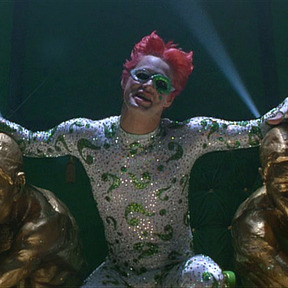
But every rule has an exception, and despite all the Supermen, Green Lanterns, Flashes, Wonder Women, Aquamen (ugh), and other flat, boring characters, DC has at least given us the Batman. It’s hard to point out exactly what makes Bruce Wayne so cool, maybe it’s because he’s a world class martial artist, maybe it’s the high-tech toys that make him such a great detective, or maybe it’s the fact that he’s just a few life choices away from being one of the anti-social psychopaths he fights so hard to put away. Since his initial appearance in Detective Comics  Batman has emerged as arguably DCs most beloved character, and has been featured in countless comic stories, from the awesome…


Is that… is that a god damn dinosaur in the back?
To the… not so awesome…


But that didn’t stop Batman from spawning not only what is arguably the best comic book film franchise, but what may now be considered one of the best film trilogies of all time. What started with a great comic film in Batman Begins led to the near perfect specimen The Dark Knight, and finally to close it all out Christopher Nolan has given us The Dark Knight Rises. Was it a fitting end to this amazing series?
Yes… absolutely.
I’ll start out by saying right off the bat that this film was not quite as good as The Dark Knight, but that doesn’t mean that Christopher Nolan didn’t stick the landing perfectly. In fact, while I consider DK to be the better of the two films, I found DKR to be the more entertaining of the two. On the other hand, this film is pissing off a LOT of people, mainly hardcore fans of the Batman comic such as Harry Knowles at aintitcoolnews. For the most part, what’s irritating these people so much is the fact that Christopher Nolan is straying from the source material of the comics, but seriously, it’s not as bad as some people are making it out to be.
For example, and again… SPOILERS... a lot of people are pissed off that at one point in the film Alfred actually leaves Bruce Wayne because he can’t stand watching him hurt himself anymore. People are crying foul that Alfred from the comics never would have left his side, but somewhere in this whole mix people seem to have a double standard of what’s acceptable and not in comic adaptations. They’ll scream that Alfred wouldn’t leave Bruce’s side, but at the same time these critics find no problem with something like Spider-man having organic web shooters or Sabertooth being such a quiet, compliant weirdo.


This is literally 93% of his dialogue

Listen, I can only speak for myself, but I have no problem with adjusting fire when dealing with character traits as long as it advances the story and has emotional purpose behind it. If you can just let go of the world of the comics then you might be able to notice that the scene where Alfred says goodbye is actually a pretty damn gut-wrenching scene. It sets up the idea that Batman is going to be facing this storm alone and foreshadows the sense of hopelessness and abandonment that Bruce is about to experience, but instead people will just shake their heads and say “Pfffft… this is bullshit.”
Just because someone is directing a movie based on a comic doesn’t mean they need to interpret it word for word, they are just using it as a structural backbone for a story that THEY want to tell. Nobody complained that The Dark Knight was an interpretation of George Bush vs. Terrorism, so why should they care now? This is the director’s vision of the story, how dare we as spectators cry foul when they change a fact here or there. If you want a word for word version of Knightfall, then read freaking Knightfall! Now obviously I have a problem with changing the story so much that it no longer resembles the source material, like Stanley Kubrick’s The Shining, or with changing the story for reasons so stupid that the resultant mess turns into a colossal joke.


Oh, hey… how’d this get in here?

But let’s get to the meat and bones of this film. The story starts off almost a decade after the events of The Dark Knight. The death of Harvey Dent has led to the passing of an initiative that allowed the Gotham Police to wage war on organized crime, completely ridding Gotham City of any serious crime syndicates. Bruce Wayne has retired the cowl since being exiled from public favor after taking the blame for Dent’s death, and has since become a shadowy recluse confined to a wing of his mansion and leaving him a shell of the man he used to be.
It’s during this time that we see what being Batman has truly cost Bruce Wayne. The death of his true love has hollowed him out spiritually, and years of fighting crime has utterly destroyed his body. He’s suffering from a slew of horrendous conditions, including a complete loss of cartilage in one of his knees, kidney damage from the poisoning he took in Batman Begins, tissue damage and bone problems from broken appendages not being set right, and countless Traumatic Brain Injuries leading to brain damage. In short, Bruce Wayne is a mess, but he is totally happy with hanging up his cowl and living the rest of his life knowing that he helped clean up the city by taking the fall for Dent’s rampage, even if it wasn’t quite the way he imagined doing it.
Commissioner Gordon on the other hand is not so content, and as the film begins his inner conscience is beginning to overwhelm his love of a peaceful city. He is debating whether or not to inform Gotham about the truth surrounding Batman’s exile, and while he knows this will probably result in overturning most, if not all of Dent’s convictions he believes that Gotham deserves the truth and it deserves the return of the Dark Knight. Gary Oldman’s portrayal of Gordon has always been one of my favorite parts of Nolan’s re-imagining, trading in the bumbling old curmudgeon archetype most people associate the role with in exchange for that of a good, honest cop just trying to do everything he can for the good of the city.
Finally we have the antagonist of the film, a ‘roided out Tom Hardy taking on the role of Bane. Comparing him to Heath Ledger’s Joker would be unfair, so I’m not even going to try to make a comparison because to be completely honest, it doesn’t matter. The fact is that Bane was exactly what he needed to be in this movie, not simply turned into a stupid, grunting, asshole monster of a side-character thought up by an incompetent, lazy director.


Oh geez! Not another one! How’d these get here?

Now fans of the comic know that Bane was actually a brilliant tactician who played the city of Gotham like a game of chess, and that’s exactly what we get in this movie. The opening scene gives us a taste of the brilliant planning Bane is capable of, and instead of giving him a loud, booming, beastly monster voice like many fans speculated he would possess, he sounds more like Sean Connery speaking into a voice disguiser. It’s a bit off putting the first time we hear it, but it helps him come across as intelligent, and as the film goes on we quickly appreciate the real danger this voice represents. The choice of using this type of voice is a strange choice, and once again a lot of fans are complaining about it, but I think it works perfectly. It shows how if a competent director is changing source material, it's probably for a good reason. The important thing to remember is that most of the time…


not always…

but most of the time this can payoff big if the director knows what he is doing. This is especially effective the first time we see him and Batman fight, and hearing him quip off one-liners as he utterly decimates the Bat makes it even more terrifying in that creepy voice.
Bane’s ferocity is also a thing of terror, and his utterly brutal fighting style can be felt with each punch and kick he delivers. Each blow can be felt by the audience, and the scene is even more disturbing to watch when we see the look on Batman’s face when he realizes that this guy is winning, I mean actually WINNING. When Bruce finally puts the cape back on after his retirement he almost exuded a cocky arrogance about him, after all, he was the god damn BATMAN! He didn’t lose a fight to no one! But all that cockiness goes right out the window when Bane delivers that first haymaker, and as we see Bruce’s eyes fill with something that looks like disbelief and confusion, we the audience feel scared for what’s in store for Batsy.
The three main leads set a high bar for the film, but the two biggest supporting characters of the film were just as great. The first was Anne Hathaway as Catwoman, and while I always thought that she was a terrific and talented young actress I was completely caught off guard when I heard she would be playing Cat. This was honestly the last person I expected in the role, but I gave Nolan the benefit of the doubt because he clearly knew what he was doing. After all, this is the guy who took this…


And gave us this…

And again… I wasn’t disappointed. Anne Hathaway turns in a different role than the one made famous by Michelle Pfiefer, trading sultry sensuality for competence, intelligence, and elegance. Once again abiding by the rules of the Goyer Batman universe Selina Kyle is not a superhuman as much as she is a master thief with a penchant for cool gadgets and highly expensive tastes, and if you didn’t know better this could almost be just a really good cat burglar in the real world. In fact, I could be wrong, but I don’t even think anyone even said the word “Catwoman” through the entire film. The film also goes a long way to downplay any sexuality that Hathaway unwittingly exudes, and this actually helps establish Selina as an interesting and dynamic anti-hero instead of a revenge driven villain. Even that famous catsuit that the internet went ape shit over is barely in the movie.
Finally, Joseph Gordon Levitt is an outstanding (almost last minute) addition to the film, and even though at first I wasn’t sure of his role when they announced him I couldn’t be happier with his contribution to the film. I was so sure that he was going to be Jean-Paul Valley that that I was almost… ALMOST disappointed he didn’t wear the cowl, especially since at one point in the movie I was SO sure it was him. Nevertheless, his honest, subtle performance as a good cop who desperately believes the world needs Batman back is so well performed and compelling that I could watch a movie about just his character (which as it turns out, we just might… hint hint!).
I won’t delve into the rest of the film, as I believe that the less you know about it, the more you are going to enjoy it. I’m very glad I read nothing about The Dark Knight Rises prior to its release, as the movie is full of surprises, twists, and well executed scenes. I will however say that unlike the last five Batman films, this is truly a story where Batman shines brightest. Except for Burton’s first Batman film, every single movie always managed to overshadow Bruce Wayne with something much more distracting, whether it be from the style (Batman Returns), the cheesy villains (Batman Forever), the publicity storm (Batman Begins), the Joker (The Dark Knight), or the laughter, (Batman and Robin).


Remember the laughter?

This time around though the focus is on Bruce Wayne, all that other shit can just wait while we flesh out his story. Luckily, the always fantastic Bale is up to the task, and not only is this by far his best turn in the role, but it should go without saying that is the best turn in the role of Batman for all time. His previously mocked “Clint Eastwood” voice is more subdued this time around, and is perfectly balanced between intimidating and disguised. We feel every emotion imaginable as we see Bruce Wayne face impossible odds over and over again, and we feel the triumph every time he overcomes them. It’s a classic and harrowing story of love, hate, betrayal, loss, adversity, and most importantly of all, redemption, and it’s a great way to send out this amazing re-imagining that may very well be the greatest trilogy of all time.
Now sure, there are certainly flaws with the film, most notably of which a lot of people are saying that the second act is very boring. I couldn’t disagree more, as this is the moment where Batman gets more exposition than every other Batman film combined, but I will say it is quite dry. I know why Nolan wanted it like this, but it doesn’t help to have something like this in a film that is nearly three hours long. Also, there are quite a few twists through the film, and while 90% were very poignant for the plot, there was one in particular that I didn’t quite like as they tarnished a character I had come to love so much throughout the film. I kinda had the feeling it was coming, but I was still disappointed when it happened. Another twist at the very end had an execution that was so poorly thought out that I found it flat out insulting, and I’m about to delve into SERIOUS spoiler territory so if you haven’t seen the film or don’t want to hear it, scroll past.
SPOILERS!
I hate… HATE how they had to actually say that John Blake’s legal name was Robin, like we the audience are so stupid that we needed to hear that one specific word to get the association. Would it really have been so bad if the line went like this?
Woman at Counter: “You should use your real name, Richard Grayson sounds much better.”
Even people who haven’t read the comic would be able to put it together when they saw the last frame of the film, and believe it or not I don’t have a problem with Robin taking over the cowl as this is actually happening now in the comic world of Batman. I literally tilted my head back and groaned out loud in the theater when they said the word “Robin”, and it reminded me of when they had to put Harry, Hermione, and Ron’s childhood heads on adult bodies at the end of the last Harry Potter film because they thought we were too dumb to know what was going on.
END SPOILERS
I hear rumors of Warner Bros trying to follow The Avengers coat tails by gearing up to tackle a Justice League movie of their own, and after watching this film I almost wish they didn’t because I just want the legend of Batman to stay with this franchise forever with this amazing send off. The future of what Warner wants to do with Batman is unclear at this point but make no mistake, the story of Bruce Wayne ends here. If they really decide to continue forward at this point, let’s hope they do it with a little more dignity than they did the last time they switched directors.


What the hell?!? Seriously, how do these keep getting in here?
9.5 out of 10

Wednesday, July 11, 2012

Toothpick TV: Doctor Who

As a nerd, I have a great love for all things science-fiction. There is no genre in film or television that even comes close to being able to take the viewer on an amazing adventure beyond their wildest dreams, often setting the stories in the future or alternate worlds just to explain the insanity their story is trying to convey. It’s this “balls-to-the-wall” crazy, no holds style of storytelling that draws in many lovers of science-fiction while alienating a great deal of others with its’ frequent lack of heart that is usually lost in the madness.
But once in a while, a great science fiction project falls into our lap that manages to mix the surreal world of imaginative science-fiction storytelling with a whole lot of human heart and likeable characters.


Thus summarizes my love for Doctor Who, a show that I consider to be the most enjoyable work of television science-fiction in the last fifty years, which is fitting because the show has just celebrated its’ fiftieth anniversary. Now before you assume the show has been on for fifty straight seasons you should know that throughout the shows’ life it has encountered a series of bumps and obstacles keeping it from perpetually running. However, the show has run for over thirty-five cumulative seasons and released  several dozen movies, cementing it as the longest running science fiction show of all time and the longest running BBC show of all time.
 Doctor Who first aired in November 1963 as a family oriented educational show, with the main character (a mysterious old man simply called the Doctor) using a time machine to transport his granddaughter and her teachers through time for history lessons. As time went on though, several problems began to arise with the format of the show. Things such as diminishing ratings, lack of funds, and the failing health of the actor portraying the Doctor forced the series to begin to go through a sort of progressive change, slowly turning the show from educational into pure science fiction.
As time went on more and more of the Doctor’s history became clear to the audience. As it turns out the man known as the Doctor was not really a man at all, but actually a member of a race of aliens called “Time Lords”, named because their highly intelligent minds had mastered the science of time and space. To address the departure of William Hartnell (the actor who played the first incarnation of the Doctor) it was explained that instead of dying, Time Lords had a unique ability that allowed them to regenerate into an entirely new body once their old body expired, being able to do this at least thirteen times before meeting their ultimate end.
If Fringe (one of my other favorite shows I have reviewed on this site) can be seen as The X-Files on steroids, Doctor Who could be seen as The X-Files on LSD, Angel Dust, and PCP. The show is much more “balls-out-crazy” than your typical sci-fi, and can actually be considered more science-fantasy than science fiction. This actually turns out to be a strength of the show, as the dilemma of each episode is even weirder than the episode before it. A regular episode could consist of the Doctor and his friends travelling to renaissance Venice to battle a group of vampire aristocrats who actually turn out to be mutant fish monsters from space.


I am not joking you, that is an actual episode of the show.

Or maybe you would prefer the episode where the Doctor and his friend travel to a World War II torn London and team up with Winston Churchill to stop a race of evil armored space squids known as Daleks from helping the Nazis win the Battle of Britain.


Again, not an exaggeration.

Despite the surprising plots of the episodes, the story has always been slowly advanced forward one way or another over the course of a regular season, as in one season might focus on solving the mystery of the destruction of the TARDIS while another focuses on the resurrection of the Daleks. One season actually serves as a mystery of “Who Killed the Doctor?”, and this format is a welcome change of pace from most “monster of the week” styles of television sci-fi. While Doctor Who certainly has a great share of these episodes, they are liberally intermixed with several episodes advancing the Doctor’s struggles with one of his many arch nemesis’(the Daleks, Mister Saxon, Stavros, the Sontarons, the Silents, etc), which also allows the show to create several antagonists with deeper story arcs to their character.
So why do I love this show so much? To be honest, for a show that revolves around a person from another planet, it’s the human element that resonates so strongly for me. The Doctor is one of the interesting and dynamic characters I have ever seen, possessing a depth and realism to him that is hard to match both onscreen and in literature. The Doctor is capable of truly amazing things, and many Whovians have made the argument that the Doctor could just be the personification of God in a humanoid body. It’s a very interesting idea, especially when you factor in the idea that one of the biggest arguments against the existence of God is the question “If God is all-knowing, all-caring, and all-powerful, the how can so much evil exist in the world?” Well, let’s break this down from the Doctor’s point of view.
1. God is all powerful-At first glance this statement might seem like God (the Doctor) would be an invincible, unstoppable juggernaut of destruction if he chose to be, laying waste to his enemies without a second thought, but this doesn’t have to be the case for it to be true. While The Doctor may not be considered “all powerful” like God, he has a number of abilities and tools at his disposal which (when viewed through human eyes) which could be considered Godlike. For example, he has a machine which allows his to be anywhere at anytime that he chooses in time and space (Omnipresence?), and he has an all purpose device called a Sonic Screwdriver which can be used to do everything from open locked vaults to repair entire space stations in the span of seconds (Omnipotence?). Most importantly of all however, while the Doctor’s body may be as frail and weak as a human body, he is ageless, and if he is mortally wounded he possesses an ability which allows him to completely regenerate into a new body should he die (Immortality?).
Even though The Doctor has a normal body you can call him anything but weak, he just defeats all of his opponents with intelligence and science instead of the brute strength or reality bending power we associate with God. In fact, comedian/genius Craig Ferguson (a Whovian himself) has implied on many occasions that the reason the Dosctor appeals to nerds like myself so much is that he epitomizes how conflict can be resolved with intellect instead of brute force and cynicism.


 On several occasions The Doctor has easily dispatched an alien force singlehandedly that Earth’s combined Armies couldn’t hold a torch to. Even though The Doctor has always allowed his enemies a chance to walk away, he has never hesitated to kill them in cold blood if they reject his offer, and he can certainly be viewed as “All Powerful”.


Usually while sporting a truly atrocious wardrobe

2. God is all caring-The Doctor cares a great deal about all living things, and as I’ve mentioned on this site several times he is always happiest when two sides involved in a conflict can walk away happy and unharmed. In fact, on several occasions he has offered the olive branch of peace even while the aggressor is still in the process of shooting at him. I know I just brought up how he always offers a truce to the aggressor if they just walk away, but even should they turn on him and reject his proposal he never takes an action that is more drastic than it needs to be in order to defend the innocent.
Now the Doctor has done some truly horrific things, he’s destroyed entire planets, wiped out whole civilizations, and tortured many protagonists literally for eternity. He was even resplosible for the extinction of his own people when he saw them transform from wise, benevolent caretakers into blood-thirsty soldiers, but every single one of these actions was necessary and he always did so if it meant the continued existence of the greater good. All of these actions were defensive, and he did it because he cared for the universe, specifically humans, whom he has always loved and protected. Sound like someone, or something familiar?
3. God is all knowing-Now this one is a little trickier, as on several occasions The Doctor has walked into a situation he was not aware of and had to figure things out before proceeding, but that doesn’t mean he can’t fall into this category in a lot of other ways. The Doctor may not know all of the answers all of the time, but he does possess:
                a. The knowledge to figure these things out
                b. The experience to know how to deal with every conceivable dilemma
                c. The scientific prowess to navigate seemingly impossible scenarios
The Doctor is nearly a millennium old, and he has been travelling the universe for almost that entire time. As a result, the guy can speak every language in existence, knows intimate details of every species he encounters, and has enough scientific knowledge just off the top of his head to do something in mere seconds that would take an army of scientists years to do. Now this may not seem like something that can be called all powerful, but it certainly seems godlike next to people like us.
Now again, the Doctor never claims to be God, it’s just a comparison that can be gleaned when viewing The Doctor through human eyes. Add this perception to the fact that The Doctor loves human beings (he seriously thinks we’re the bee’s knees), he has a set of moral rules, and that he works in the shadows, accomplishing miracles without staying around to be thanked or praised, and you have a pretty strong case to compare the two. Also, he needs us, hence the point that he always travels with a human companion to keep him company. He may keep them around for company, he may keep them around to keep his ego in check, but more often than not, it’s for reasons that run much deeper than that.
Take the most recent companion Amy Pond for example, when the Doctor first meets her she is ten years old and thinks he is some sort of magic policeman who has come to solve her problems (which he actually offers to do). Before he can though he has to make an emergency time jump five minutes into the future to fix his time machine, but of course he miscalculates, and instead jumps twelve years into the future and meets a twenty two year old version of the girl he met. He realizes that his disappearance has severely damaging Amy’s childhood, and after saving her life (along with Earth), he discovers that she grew up praising him and arguing with anyone who tried to convince her that The Doctor wasn’t real, causing her to be declared borderline crazy.
Now why would the Doctor take this emotionally damaged and fragile girl on dangerous adventures that would endanger a life he already partially ruined? Is it guilt? Is it worry? No, I think he takes her on his adventures because she worshipped him as a sort of deity. Keep in mind, he decided to pick her up for their travels the day before her wedding, so even though he may feel guilty about everything he put her through, he sure doesn’t seem to worry about what he’s about to put her through. I mean, this is all conjecture of course, and let me know if you can think of another reason of why an arrogant guy with a kick-ass ride would try to pick up a naĂŻve but kind, funny, twenty-something year old girl who literally worships you and would do anything for you.


Also, she looks like this.

The point is, she puts him on a pedestal and would follow him to the end of the Earth, and while that may seem condescending on the Doctor’s part it’s a lot like how people think it’s hypocritical that God created us so we could sing his praises. He doesn’t need them, but he finds it reassuring when he sees it and it helps remind him why he loves us so much. His love for us is comforting to see, in fact in one season the Doctor started out as a nihilistic insensitive prick and this turned out to be a disaster of a personification. I mean sure, Eccleston (the 9th Doctor) brought us a Doctor who was kind of a bad-ass, but his beliefs were completely against everything the Doctor stood for.
Eccleston’s reasons were kind of sound, he had just come off from a massive galactic war and had seen the worst the universe could offer, but this attitude he gave off was still unsettling and unwelcome to the fans. Over the course of the year though the Doctor’s perception of humanity begins to skew as his companion Rose realizes he needs help. During their adventures the Doctor begins to trust Rose more and more, and eventually sees that she encompasses the good side of humanity that he seems to have forgotten.


But how did she convince him?

By the end of the first series the Doctor is almost sort of born again, which leads us to David Tennant taking the role for the second series. His portrayal as a kinder, funnier, more charismatic Doctor was embraced by the fans, but just like Eccleston he continuously showed a dark side lurking beneath should problems arise. After Tennant came Matt Smith as the 11th Doctor, and his portrayal is somewhere in the middle of Eccleston and Tennant with a bit of mania thrown in for good measure.
At the end of the day though, Doctor Who is one of the best things to come out of Great Britain since Shaun of the Dead. Very rarely do I get as riled up for a show as I do for this one, and Saturday nights are great nights for television now because of this one show. I can’t think of many things more relaxing than grabbing a beer, a pizza, and watching the Doctor and friends team up with a group of pirates to fight an evil spirit of the sea.


One more time, I cannot stress enough that these are actual episodes.

Tuesday, May 22, 2012

The Avengers


It’s not often that a film comes around with the expectations that The Avengers pulled. A film that technically began with the release of the first Iron Man film, The Avengers grew as a promise from a studio to the fans of things to come should all the stars align in the project. Finally, after almost five years and an overall price tag of over $450 million just for the films leading up to it, Marvel’s The Avengers finally hits the theaters to a very anxious audience. So after all this time, was it worth the wait?
Yes… Holy God yes.
I’m not going to lie, for a long time I had a very deep rooted fear that the end of this project was going to be an abysmal, 2nd rate “Who cares about the fans” rush job akin to X-men 3…


Ew!
 or Spiderman 3.


Ah Gross!

A film with expectations as large as it had along with cast changes and a director with only one low budget film (albeit an excellent film) under his belt is just a minefield of problematic  nightmare production scenarios just waiting to happen.


Oh no! Oh God NO!
Well, rest assured that Mr. Whedon has succeeded in this film in that even a fan like I never could have expected. The Avengers was a flat out lovable and entertaining thrill ride of the highest caliber, delivering a great experience not just in action but in loveable character development too. This film is so thoroughly entertaining that it transcends just itself and gives us a reason to love other, weaker films as a whole. Just as the Star Wars prequels were so bad that the they tarnished the original trilogy with their defamation of classic ideals and beliefs, The Avengers was so good that is retroactively supplemented the weaknesses of the previous Marvel Avenger films.
What do I mean by this? Well think back to my original Captain America review I write a few months back. As you remember, one of my largest pet peeves with the movie was the fact that American patriotism seemed to be disturbingly underplayed in a film where it should have been oversaturating to the point of propaganda. Instead, we got a watered down, politically correct, “First Avenger” film that did its best to wipe away any trace of an American Flag or a Swastika. Then The Avengers comes around and undoes all the PR crap that contaminated the first film. There’s a really great scene, simple, but great, where Agent Coulson is talking to Cap about his new uniform. A slightly disillusioned Cap mentions that the Stars and Stripes are a little outdated, to which Coulson replies how the world needs more “Old Fashioned”. It’s a fantastic moment of character development, and it comes across so effortlessly and organically that it’s a testament to the talents of Joss Whedon.


In fact it’s just one example of the immense talents of Mr. Whedon, as this film positively glows with his influence at almost every moment. Several of his filmmaking trademarks are on full display here, including his tight camerawork, sharp writing, and witty humor.  There are seriously so many things to like about this film that only the most hardened haters out there will find things to fault this film on.


If they could do it with this… they’ll do it with anything


The big thing this film pulls off though is being a straight forward, enjoyable summer action film, and it does that in the best possible way, with a lot and lot of deep character exposure and development. No gimmicks, no tacked on summer movie clichĂ©s, just the development of characters that we end up really caring about and believe in. It’s chock full of great action (action we can actually follow and understand who is fighting who) and has that very distinct Joss Whedon humor that was so prevalent in Firefly and Serenity and Buffy. As great as this crucial factor is though, what I really love about this movie are the little things that fire on all cylinders.


I mean where do I even begin listing out the little but important positive things in this film? I love everything from the significant character exposure to the well paced and well filmed action sequences. I love the Whedon penned smart dialogue that always keeps you laughing and jokes that never misfire. I love the bromance that develops between Stark and Banner as they bond over science. Stark becomes sort of a loving and abusive big brother to Bruce, in terms that he kiddingly picks on Bruce, but gets defensive when anyone else tries to push his buttons.


I also love how hopelessly outdated Captain America’s knowledge of pop culture is. There’s a great scene when people are having a discussion about the modern world and he gets excited when he gets a Wizard of Oz reference. I loved how Whedon really got everyone’s basic characterizations right. For example, you aren’t going to hear Cap or Thor make a lot of jokes, but you can’t stop Tony Stark from opening his smart mouth and making pun after pun because hey, let’s face it, it’s what he does. Sure, the other characters have a lot of funny lines, but it’s more responsive humor, or like I said with Cap, lack of understanding.


I love the fact that we finally get to see the SHIELD helicarrier and I love how we get to see what a nerd/fanboy Agent Phil Coulson is. I loved Cobie Smulders in her first appearance as Mariah Hill since fans will know how crucial she is to the Marvel universe later. I also love how whenever she acknowledges Cap it’s with the tiniest look of mistrust but when she spots Stark it’s usually with a nod or small smile, fans of the Civil War story arc will recognize the implications of those looks. And I love that when the final action scene begins, the action never lets up and it is easily in my top three action sequences of all time, unlike the 85 minute dragging finale action scene in Transformers: Dark Side of the Moon.


In fact, the entire end of the movie reminds me a great deal of the finale in Transformers 3 with the same portal opening super-weapons, the giant robotic space snakes, and the non-stop action. But where that movie utterly failed in the execution of its action, The Avengers excels for the following reasons:


The action in Avengers was well shot and clear so you could understand what the hell was going on


The finale for Avengers is roughly 40 minutes as opposed to Transformers 85 minutes


Most importantly, we have come to care about these characters by the time the finale erupts


A while back I write about how much more important a deep character association with the audience is over tons of action and explosions. I mentioned how I would rather watch the finale of Unbreakable 100 times before the finale of Transformers 3 because of how much we have come to care about David Dunn. I also brought up that in a perfect world we could have a combination of an amazing final action sequence featuring characters we have come to care about, which I’m happy to report this film does in spades. Every explosion, every crash, every moment in the action scenes have so much more riding on them due to our love of the characters, a trait Joss Whedon has learned to perfect during his tenure as a screenwriter.


In fact, Joss Whedon has refined his strengths into facets that keep this film crisp and original in unexpected ways. His original and witty writing style never falls into clichĂ©s, and he accomplishes this by using a distinct style where an action will happen, the audience will feel like they are going to guess the next thing that’s going to occur in the film, but then Joss will pull the carpet out from underneath you and throw a twist you didn’t see coming at you. One great example involved Hulk facing off against Loki, Loki beginning to monologue at the Hulk, and then as we get ready for a fight something happens that you seriously never expected. It’s just so refreshing and original to see something new like that on the big screen that you can’t help but laugh for several minutes afterwards. Could you imagine Michael Bay trying to do something different like that? Could you imagine what would happen to him if he tried to be original? I can probably sum it up in one image.


Watching this movie it’s abundantly clear to me that Joss Whedon grew up as a huge nerd, which pays off because we get to reap the rewards of this creative imagination.  Where else could you find real and non-shoehorned ideas about how Thor and Iron Man face off? If this were any other movie we would probably see a love triangle develop between Black Widow and two or three of the characters, escalating stupid and forced tensions until someone inevitably utters that line… you know… the line that goes something like “THE WORLD’S NOT ENOUGH FOR YOU TONY?!? YOU CAN’T HAVE HER! (Throw shield/hammer/boulder)”, but again, not the case here.


Even though I was a little worried by Disney brining Joss Whedon into this franchise I definitely got on board pretty quickly because the man is fantastic at coming up with ideas and then refusing to budge on his stances with these properties. You hear a lot of stories about the personal hells he went through to get his projects made, especially after Firefly failed so badly despite its superior storytelling, and you can’t help but respect how dedicated he is to his art. It’s like that perpetually stoned guy you knew in college got to make movies, but I mean that in the best possible ways. I imagine his pitches sound something like this:


“Dude… like… I just had the best idea ever man! No, no, hear me out man, what if like… what if we made a Western… but in space!”


Now there were certainly things about the film that I didn’t really like, but they were minor and trivial complaints to the rest of the film. I didn’t really like the opening action scene for one. It was pretty and well shot, but it felt like it was kind of tacked on as an opening action scene when compared to the scope and scale of the rest of the film, so it didn’t really do a great job setting up the tone of the movie. In hindsight though, maybe this was a good idea, because Joss Whedon has always had a talent where his shows and films get better as time goes on, just compare the first thirty minutes of Serenity to the last thirty.


Also, setting up a smaller scale opening will allow the later action scenes to be more and more exciting. As much as I loved X-men United I always thought that the opening scene was a bit of a mistake. When you have an opening as awesome as Nightcrawler’s break in scene it’s very hard to create subsequent action scenes that can hold a torch to something as cool as the first scene, with one obvious exception…


The stabbing exception.


Now work with me on this, what if instead of an explosionfest to kick things off we instead got a few more minutes of face time with Loki's intensity and his background. You don't need a ton of action to create a great scene of tension, and a great example of this theory comes from the classic genre bender Predator. One of my favorite scenes revolves around a native American member of the commando team throwing down his weapon and grabbing a machete as his friends continue to run. You think you are in for a crazy showdown between the beast and the soldier, who happens to be the only one in the group who understands what he is. Just when we think we are about to cut to the fight scene though, John McTiernan throws a curve ball and instead just has the soldier let out a gut wrenching scream of agony off screen mere seconds after the creature emerges.


Sadly, White Man's Guilt is not the Predator's weakness

I don't know if it was done intentionally like this or if there was just a budget constraint but the end result is a thousand times more awesome than seeing a fight scene between the two. Here we thought we were gonna see the baddest member of Dutch's crew go toe to toe with this monster for a few rounds before conceding, but instead he gets ripped to shreds in a second. It shows us what the Predator is truly capable of, and it sort of works like the "Broken Shark" theory of film making and tension.


The point is that the opening scene in The Avengers felt very unnecessary in the beginning of the film, and that I personally would have liked to see a slower buildup to an action scene. They could have had a deeper exchange between fury and Loki, with Hawkeye getting dominated shortly after, and then maybe Loki cutting through the guards without any effort right after. It would have felt a lot more organic to me, and wouldn't have come off quite like an action scene from a season premiere of 24. But again, this is a minor complaint for a film so good.

I should also point out that it’s strangely sad when a regular, feel-good popcorn action film is something to rave about just because it doesn’t devolve into action schlock like Transformers or Battleship.

 
Unfortunately, I know it’s just a matter of time before the studios totally drop the ball and start making gigantic mistakes like trying to cut the budgets of the film, firing talent, and pissing people off. Mark my words… after the next Avengers or possibly two more if we are lucky, Disney will start doing stupid crap that’s going to send the franchise down the tubes. This is when studios begin to fire the Tim Burtons and bring in the Joel Schumachers like the y did with the Batman franchise, or fire the Bryan Singers and bring in the Brett Ratners like they did with the X-men franchise. Or maybe they will force the directors to do their ideas instead of what thee director wants to do like when they forced Venom onto Sam Raimi in Spider man 3.


All in all, this film is easily in my top three comic book films of all time with X-men United and Dark Knight Rises, but the only reason I can’t label it number one is because those three films are so different in tone and atmosphere. It’s like asking me to pick whether I liked The Big Lebowski or The Empire Strikes Back more, it’s just not quite fair. It may not be a great example of a film that does anything new, but it’s certainly a great example of a film that does everything right.


9.75 out of 10

Friday, March 16, 2012

The Wolfman

The Wolfman? Didn’t that movie come out like two years ago or something? Why would I review a movie that’s almost two years old outside of a Rewind segment? Well as it turns out this film turns out to be a great example of a bad example, and passing up a chance to review it would be a huge mistake to express a great number of personal beliefs when it comes to making a quality film. Plus when you think about it, the film isn’t really THAT old, so we can use it to properly discuss the importance of great potential in film being completely squandered.
When I first heard they were going to remake this film my first thought was something along the lines of “Why?” I thought that remaking this film was yet another example of Hollywood using a established brands to try and cash in the quick buck.


But when I calmed down and got over my initial shock I realized that this film was actually a perfect candidate to be remade. At this point it was the last original Universal Monster film to be adapted (Dracula and the The Mummy had both been released and more or less embraced by audiences, Frankenstein… not so much), and when it was originally released it lacked a lot of the tools and funding that could have made it a really good monster movie. Then I heard Benicio Del Toro was attached to the film as the titular character, and my hopes really started to peak. Not only is he one of my favorite actors, but casting him was perfect, as even on his best days he looks like Javier Bardem perpetually transforming into a werewolf.


Then I heard that some more of my all time favorite actors (Anthony Hopkins and Hugo Weaving) and one of my favorite up and comers (Emily Blunt) were on board, and my excitement flat out started to soar.
And then I heard Joe Johnston was directing…
Well, I can deal with that I suppose. I mean I liked The Rocketeer, and October Sky, and… Timothy Dalton in The Rocketeer. And even though Johnston has made some real stinkers in his time (Jurassic Park III, The Pagemaster) the bulk of his films were very passable. Plus he fought his ass off to get this movie made as an R film instead of PG-13, so clearly he knows what this film is supposed to be about. Then I saw the trailer and I was back to being like “Hey, neato! This looks really cool, this looks like what a Wolfman movie should be!”
Oh how I was mistaken, oh the sad, sad pain I was in for once the second half of the film systematically began to violate my childhood memories.
Now in all fairness I’m not gonna hesitate to say that I absolutely loved the first half of this film. The film looked absolutely beautiful, and Victorian era London has never looked more alive or more terrifying. Dark, twisted, foggy forests and bogs are used to great effect to create an atmosphere that elicits fear while an industrial city of London elicits an atmosphere of a spooky early metropolis full of tasty Wolfman treats. The opening scene brings us into the action with a short, terrifying chase leading to an off screen death, the only reveal of the Wolfman being a bloody claw, a perfect throwback to the classic Universal monster films of old.
We meet the bulk of our main characters and for the most part I like them. They may be one dimensional and shallow, but they are real enough as simple werewolf bait, and Del Toro brings a fantastic sense of sorrow and remorse to the role of Lawrence Talbot that hasn’t really explored that side of a monster before. We meet the love interest, and this is the first sign of impending doom that we get from the film. There is NO chemistry between the two leads, and while I typically love Anthony Hopkins it appears that in this film he seems to be almost… parodying himself. To make matter more complicated is the fact that his entire character seems to be contradictory, and while this may be alluding to the nature of his character (I’ll touch on that later) it seems like it’s more of a writing problem than a character point.
But all these problems go right out the damn window once we see the wonder that is the Wolfman in this film. Our first glance occurs at a gypsy camp, a gory tour de force that shows a crowd squealing with delight at how an R rated monster movie SHOULD be filmed, entrails raining and blood spurting at every possible moment. This culminates with Lawrence being (of course) bitten by the Wolf, and following this is a montage of his healing for the majority of the next month. We pick back up just days before the next full moon, and it’s during this time that we see the transformation Lawrence has already gone through.
This is a great moment, as we see a new, confident, and dangerous Lawrence beginning to emerge. One of my favorite scenes revolved around Talbot casually walking (actually more like strutting) into a room with a formerly aggressive dog following on his heels to meet the detective following the murders. The sheer confidence and quiet menace that Del Toro exudes is palpable, and his calm grin says more than all the dialogue in the world could accomplish. This all leads into Lawrence’s first transformation, and it’s at this point that I really began to love this film. The transformation scenes are nothing short of perfection, bones snap and crack to realign as Lawrence’s form becomes that of a feral, savage beast.
Each transformation scene is fantastic to watch, with the final product being a perfect combination of modern make-up and prosthetics and the original design from the Lon Cheney Jr. version. There’s a segment that really stands out where Lawrence transforms in front of a college class in the middle of London, and this scene is hands down my favorite moment in the film. Johnston pulls out all the stops in this moment, giving us a beautifully shot gore-fest that nearly brought tears to my eyes. It was so exciting and so indulging to the monster movie lover that it almost single-handedly justified why a remake of this film should be made. Everything was going great in the film… until the second half began ruining it all.

Just like this


Right around the second half of the film things begin spiraling down the drain in terms of direction and story, and surprisingly it’s not because of the effects. Instead, it’s because the story apparently doesn’t know what it wants to be and suddenly transitions into something a werewolf movie should never be. The film goes from focusing on the duality of man’s nature and turns into a cheesy, ham-fisted attempt at becoming an Oedipal story.
You see, what makes the legend of the werewolf so terrifying isn’t the fact that it’s a big scary monster that’s going to eat you (well… maybe it’s that a little), but it’s the idea of losing yourself to the dark side of man’s dual nature. The idea of devolving from a man into a raging, hulking animal beast that would eat your friends and family if you could is waaaaaay more disturbing to the psych, especially since man’s nature has always had two sides to it, a yin to every yang. It’s the same reason the modern idea of the zombie is so terrifying. A slow, shambling stupid person who could bite you isn’t as scary as the idea of becoming a zombie, losing your humanity and transforming into one of the masses, nothing on your mind except eating those closest to you is way scarier than just getting bitten.
Robert Louis Stevenson’s story The Strange Case of Dr. Jekyll and Mr. Hyde explored the idea of man’s dual nature, and if you think about it the original Wolfman could almost be seen as an adaptation of the classic story. A great deal of the story revolved around Larry Talbot having visions of his time as a monster and fighting the urge to hurt those he loved, which was a metaphor for Larry fighting the dark side of every man’s nature. His transformation into a monster is really nothing more than a man losing control and letting himself give in to that dark side of humanity that threatens to turn every person into an agent of evil.

Unrelated photo

In this film however, this interesting execution is completely replaced with something that doesn’t belong anywhere near a Wolfman movie, a metaphor for the Oedipal Complex.
In a nutshell, the Oedipal complex is a psychoanalytic idea that everyman has a subconscious desire to murder their father and have sex with their mother. It’s a highly debated and often rebutted idea in psychology, but that hasn’t stopped it from being a driving force in many classic films. This theory and idea has been featured in the most diverse films imaginable, in everything from Psycho to Star Wars, but a good film usually tends to incorporate personal struggles and themes into their films. The main protagonists in Robocop and The Matrix were supposed to actually be interpretations of Jesus , Spiderman is supposed to be a thinly veiled coming of age story, Batman in The Dark Knight was supposed to be a representation of George Bush fighting terrorism, and even Top Gun was supposed to be an allegory for a gay man struggling to come out of the closet. Every script worth its salt will typically have an underlying purpose to it.

Although some are less subtle than others

The problem with The Wolfman however isn’t that it tries to convey a message, the problem is that is decides to depict the least appropriate message imaginable for the type of film it comes across as. When you are making a monster movie, and addressing the duality of man falls directly into your lap, then you should just go with it and give the film a little more depth while your werewolf is eating villagers by the dozen. Instead, Johnston decides to shoehorn a really inappropriate message into the film about halfway through instead of just sticking with what he started to address in the first half of the film. It just comes across really awkward, and it would be like if halfway through Iron Man 2 they decided to completely throw away the entire reference of Tony Stark being the “objectivist hero” from Ayn Rand’s Atlas Shrugged the and turned it into a coming of age story instead.
The writing also seems to drop right off the face of the Earth about halfway through as well, and I’m not sure if it’s because of the actual writing itself or because there is nothing going on between Benicio and Emily chemistry wise. It just feels like they knew the film had a great first half, but then they panicked and thought they needed more depth and soulful writing in the second half to make it a more meaningful film. Monster movies aren’t supposed to be Oscar contenders, they’re just happy, pulpy, guilty pleasures for twisted people like me. If you wanted to you could even make a great monster film without any blood, just look at Monster Squad.
As much as I loved the first half of this film I felt devastated as the second half completely derailed all of the credit the first half created. I’d love to tell you that we have another great monster movie remake in our midst, but much of the appeal this film could have had is somewhat squandered by the end. If you’re a fan of gore and monster films you definitely shouldn’t pass this movie up, but there isn’t much more going for it than that.
6.5 OUT OF 10

Tuesday, March 6, 2012

March Rewind: Children of Men


I love me some film, and those faithful readers who have been following this blog since the first article will know that one of my favorite all time films is Children of Men, but sadly most people out there haven’t even heard of this film, let alone seen it and told their friends about it. Due to this lack of knowledge combined with the super high quality of the film, I think it’s only fitting that Children of Men be my pick for the February Rewind.
Children of Men tells the story of the decay of society following a planet wide infertility crisis in which every single female has apparently lost the ability to carry a child. In the face of this crisis, every major government has collapsed to revolutionaries and fear mongers except for London. Surviving refugees flock to London by the thousands, and as a result London has been transformed into a militarized police state which rounds up and “disappears” them into refugee camps scattered across the countryside. This has led to immigrants creating increasingly militant rights groups that have become more and more hostile as their rights become more and more trivial.
Enter our protagonist Theo Faron, a former activist turned bureaucratic government worker who has grown weary and disillusioned following the death of his son and the decline in hope through the world and has become just another hopeless citizen waiting for the world’s final clock to tick down. In fact, our first impression of Theo is utter apathy when he pushes past a group of shocked onlookers who are watching a story on the news about the youngest person in the world being killed (the equivalent in their world of the Pope being assassinated) just so he can order a cup of coffee. Even worse is that after this scene, even though the news of this persons death doesn’t even phase him, he doesn’t pass up the chance to use this as an excuse to go home early from work to “grieve”.
Theo is not your typical protagonist, he’s cynical, he’s angry, and at times he’s borderline depressed about the world dissolving around him, but as we see the world he lives in we understand why he is this way. In the opening scene we a cafĂ© explode less than thirty feet behind him from a terrorist bombing mere moments after he leaves, but it doesn’t even phase him and he goes to work later that day like nothing happened. We get a sense that events like this have just become commonplace annoyances in this world, the way forgetting your wallet or losing your keys would be annoyances today. In fact things are so bad in this world that the government has taken to handing out suicide pills for those who just want to end the story early.
Theo’s world is turned upside down when he is kidnapped by a radical group of activists called “The Fishes” who bring him in front of the last person he expected to see, his estranged wife. She pays Theo to obtain immigration papers for a refugee name Kee and to escort her into the country, but while helping this young woman safely obtain passage Theo comes to realize the big secret behind her importance, Kee is pregnant.
Like most other dystopian films Children of Men is a film about hope in the face of adversity, but where this film distinguishes itself from other films is the fact that the hope feels particularly desperate and unlikely. Theo’s mission seems more than impractical, it seems flat out impossible, and as the plot moves forward not only does Theo’s mission seem less and less likely to succeed, but we see his desperation take him and Kee to some truly dark and dangerous places. Yet all of these dark and sometimes depressing turns manage to convey a sense of dread and fear in the audience that perfectly encapsulates the dark feeling of fear and abandonment that Theo and Kee must be facing.

Yeah… pretty much like that.
In fact, this may be one of the best movies I have ever seen when it comes to making the audience associate themselves with the characters and situations in the film, which in turn creates characters that we genuinely care about and want to succeed in their endeavors. It’s not just the writing (which is admittedly fantastic), it’s every single facet of the film, from the stellar cast, to the practical effects, to the intricate and original story being told by the film. All of these facets however, pale next to my favorite single component in the entire film, the single-shot sequences.
The single shot sequence is an idea and execution that has been used before, but never before has it been used as expertly or stylistically as in Children of Men. Basically, the single-shot sequence is an extended, unedited cut used for an extended period which, when used correctly, can bring a sense of realism to an intense scene by putting the audience directly into the scene. A good example of this shot can be seen in Harry Potter and the Prisoner of Azkaban (also by the same director) when Hermione and Harry use the time device to run through Hogwarts for a second time.
Here though, this effect is used for much longer periods of time, one of which is an intense action sequence and lasts over seven minutes. One of these sequences was so original and so hard to do that the crew had to create a special vehicle and camera rigging system just to be able to create the shot. The end result is a film so chock full of exciting and original cinematography that it creates a sense of excitement and suspense that no other film can even compare to. Another shot took place during an intense chase through a warzone that lasts over seven minutes without a single cut.
Remember a few articles back where I referred to camerawork as “The Ancient Lost Art of Giving a S**t”? Well this movie is a good example of how, with a little creative camerawork, you can create a scene that is light on special effects, but still sooooo much more impressive and involving than your typical Transformers kind of action film. The film comes off gritty and violent, almost like a wonderfully shot documentary in the middle of a war, and there are some brutally awesome violence like a guy getting his face smashed in with a car battery. In fact I haven’t seen camerawork this original and crisp since Sam Raimi, and this film shows that there are still talented directors out there (rare, but still out there) that have original ideas that they can share with the rest of Hollywood to break up the monotonous piles of action movie crap being shoveled into our faces.


Seriously Hollywood… WTF?
As much as I loved the camerawork though, it’s just one facet of a film that just plain fired on all cylinders. The story is powerful and involving, and offers a realistic alternative to how the world might possibly end, through the machinations of science instead of hatred or violence between countries. The characters are wonderfully written as well, and whether it’s Clive Owen as the cynical Theo, Julianne Moore as the idealistic Julian, or Michael Caine as the disillusioned and bitter stoner Jasper (yes, this film has a stoner Michael Caine in it), every character is believable and likeable in the desperation of the world’s dire situation.
Another facet of this movie that worked really well was the fact that the antagonist was realistic and thoroughly believable in the pursuit of his goals. I can’t really talk too much about the villain without revealing some of the surprises of the film, but in this day and age of villains being cardboard cutouts of bad guys doing bad guy things for bad guys sake, it’s really refreshing to see an anti-hero like this who we can associate with in their misguided but genuine beliefs that what they are doing is noble and the right thing to do. Even more impressive is the fact that someone so unassuming and dignified could really be so capable of the horrible things he plans.
When casting antagonists it is generally a good idea to refrain from casting big names in the roles, particularly if this role is a well known one. An overly popular actor portraying the role of what is essentially the second banana can detract from the importance of the protagonist, and most great movie will go out of their way to ensure they cast a B-actor at the highest to maintain the appropriate levels of importance. A lot of times poorly chosen “in thing” A-list actors are cast into roles not because they can properly portray the character, but because casting directors think this is what kids will pay to go see on the big screen. This sort of casting can be… awkward.


Pictured: Evil Incarnate
No better example of this can be found than in the abysmal Fantastic Four film. While she may not have been the antagonist of the film, Jessica Alba’s turn as the legendary Sue Storm was nothing short of nauseating due to the worst casting imaginable. Apparently a casting director read the description “Fair skinned: Blue-eyed: Blond Haired: and mid thirties” and said “Hey, I’m sure a twenty-something Latina girl would be PERFECT for this role!” Pop in some creepy as hell blue contacts, a horrendous looking wig, and bam! You’d never know the difference.  If you could change her looks so heavily if it meant landing a talented actress like Meryl Streep or Sigourney Weaver that’s one thing, but Alba stinks up everything she’s ever been in with her acting, relying solely on her looks to get her countless roles.


Pictured: Acting

Once she opened her mouth in Fantastic Four, all bets were off.
With it’s beautiful writing, gorgeously shot scenes, fantastic acting, and solid supporting cast, Children of Men still ranks as one of my top five films of all time. This is a powerful film, and should not be seen as a feel good film due to its brutal violence and incredibly dark content, but at the end of the day it still conveys that beautiful bit of hope buried in the darkest of places.
10 out of 10