Friday, March 16, 2012

The Wolfman

The Wolfman? Didn’t that movie come out like two years ago or something? Why would I review a movie that’s almost two years old outside of a Rewind segment? Well as it turns out this film turns out to be a great example of a bad example, and passing up a chance to review it would be a huge mistake to express a great number of personal beliefs when it comes to making a quality film. Plus when you think about it, the film isn’t really THAT old, so we can use it to properly discuss the importance of great potential in film being completely squandered.
When I first heard they were going to remake this film my first thought was something along the lines of “Why?” I thought that remaking this film was yet another example of Hollywood using a established brands to try and cash in the quick buck.


But when I calmed down and got over my initial shock I realized that this film was actually a perfect candidate to be remade. At this point it was the last original Universal Monster film to be adapted (Dracula and the The Mummy had both been released and more or less embraced by audiences, Frankenstein… not so much), and when it was originally released it lacked a lot of the tools and funding that could have made it a really good monster movie. Then I heard Benicio Del Toro was attached to the film as the titular character, and my hopes really started to peak. Not only is he one of my favorite actors, but casting him was perfect, as even on his best days he looks like Javier Bardem perpetually transforming into a werewolf.


Then I heard that some more of my all time favorite actors (Anthony Hopkins and Hugo Weaving) and one of my favorite up and comers (Emily Blunt) were on board, and my excitement flat out started to soar.
And then I heard Joe Johnston was directing…
Well, I can deal with that I suppose. I mean I liked The Rocketeer, and October Sky, and… Timothy Dalton in The Rocketeer. And even though Johnston has made some real stinkers in his time (Jurassic Park III, The Pagemaster) the bulk of his films were very passable. Plus he fought his ass off to get this movie made as an R film instead of PG-13, so clearly he knows what this film is supposed to be about. Then I saw the trailer and I was back to being like “Hey, neato! This looks really cool, this looks like what a Wolfman movie should be!”
Oh how I was mistaken, oh the sad, sad pain I was in for once the second half of the film systematically began to violate my childhood memories.
Now in all fairness I’m not gonna hesitate to say that I absolutely loved the first half of this film. The film looked absolutely beautiful, and Victorian era London has never looked more alive or more terrifying. Dark, twisted, foggy forests and bogs are used to great effect to create an atmosphere that elicits fear while an industrial city of London elicits an atmosphere of a spooky early metropolis full of tasty Wolfman treats. The opening scene brings us into the action with a short, terrifying chase leading to an off screen death, the only reveal of the Wolfman being a bloody claw, a perfect throwback to the classic Universal monster films of old.
We meet the bulk of our main characters and for the most part I like them. They may be one dimensional and shallow, but they are real enough as simple werewolf bait, and Del Toro brings a fantastic sense of sorrow and remorse to the role of Lawrence Talbot that hasn’t really explored that side of a monster before. We meet the love interest, and this is the first sign of impending doom that we get from the film. There is NO chemistry between the two leads, and while I typically love Anthony Hopkins it appears that in this film he seems to be almost… parodying himself. To make matter more complicated is the fact that his entire character seems to be contradictory, and while this may be alluding to the nature of his character (I’ll touch on that later) it seems like it’s more of a writing problem than a character point.
But all these problems go right out the damn window once we see the wonder that is the Wolfman in this film. Our first glance occurs at a gypsy camp, a gory tour de force that shows a crowd squealing with delight at how an R rated monster movie SHOULD be filmed, entrails raining and blood spurting at every possible moment. This culminates with Lawrence being (of course) bitten by the Wolf, and following this is a montage of his healing for the majority of the next month. We pick back up just days before the next full moon, and it’s during this time that we see the transformation Lawrence has already gone through.
This is a great moment, as we see a new, confident, and dangerous Lawrence beginning to emerge. One of my favorite scenes revolved around Talbot casually walking (actually more like strutting) into a room with a formerly aggressive dog following on his heels to meet the detective following the murders. The sheer confidence and quiet menace that Del Toro exudes is palpable, and his calm grin says more than all the dialogue in the world could accomplish. This all leads into Lawrence’s first transformation, and it’s at this point that I really began to love this film. The transformation scenes are nothing short of perfection, bones snap and crack to realign as Lawrence’s form becomes that of a feral, savage beast.
Each transformation scene is fantastic to watch, with the final product being a perfect combination of modern make-up and prosthetics and the original design from the Lon Cheney Jr. version. There’s a segment that really stands out where Lawrence transforms in front of a college class in the middle of London, and this scene is hands down my favorite moment in the film. Johnston pulls out all the stops in this moment, giving us a beautifully shot gore-fest that nearly brought tears to my eyes. It was so exciting and so indulging to the monster movie lover that it almost single-handedly justified why a remake of this film should be made. Everything was going great in the film… until the second half began ruining it all.

Just like this


Right around the second half of the film things begin spiraling down the drain in terms of direction and story, and surprisingly it’s not because of the effects. Instead, it’s because the story apparently doesn’t know what it wants to be and suddenly transitions into something a werewolf movie should never be. The film goes from focusing on the duality of man’s nature and turns into a cheesy, ham-fisted attempt at becoming an Oedipal story.
You see, what makes the legend of the werewolf so terrifying isn’t the fact that it’s a big scary monster that’s going to eat you (well… maybe it’s that a little), but it’s the idea of losing yourself to the dark side of man’s dual nature. The idea of devolving from a man into a raging, hulking animal beast that would eat your friends and family if you could is waaaaaay more disturbing to the psych, especially since man’s nature has always had two sides to it, a yin to every yang. It’s the same reason the modern idea of the zombie is so terrifying. A slow, shambling stupid person who could bite you isn’t as scary as the idea of becoming a zombie, losing your humanity and transforming into one of the masses, nothing on your mind except eating those closest to you is way scarier than just getting bitten.
Robert Louis Stevenson’s story The Strange Case of Dr. Jekyll and Mr. Hyde explored the idea of man’s dual nature, and if you think about it the original Wolfman could almost be seen as an adaptation of the classic story. A great deal of the story revolved around Larry Talbot having visions of his time as a monster and fighting the urge to hurt those he loved, which was a metaphor for Larry fighting the dark side of every man’s nature. His transformation into a monster is really nothing more than a man losing control and letting himself give in to that dark side of humanity that threatens to turn every person into an agent of evil.

Unrelated photo

In this film however, this interesting execution is completely replaced with something that doesn’t belong anywhere near a Wolfman movie, a metaphor for the Oedipal Complex.
In a nutshell, the Oedipal complex is a psychoanalytic idea that everyman has a subconscious desire to murder their father and have sex with their mother. It’s a highly debated and often rebutted idea in psychology, but that hasn’t stopped it from being a driving force in many classic films. This theory and idea has been featured in the most diverse films imaginable, in everything from Psycho to Star Wars, but a good film usually tends to incorporate personal struggles and themes into their films. The main protagonists in Robocop and The Matrix were supposed to actually be interpretations of Jesus , Spiderman is supposed to be a thinly veiled coming of age story, Batman in The Dark Knight was supposed to be a representation of George Bush fighting terrorism, and even Top Gun was supposed to be an allegory for a gay man struggling to come out of the closet. Every script worth its salt will typically have an underlying purpose to it.

Although some are less subtle than others

The problem with The Wolfman however isn’t that it tries to convey a message, the problem is that is decides to depict the least appropriate message imaginable for the type of film it comes across as. When you are making a monster movie, and addressing the duality of man falls directly into your lap, then you should just go with it and give the film a little more depth while your werewolf is eating villagers by the dozen. Instead, Johnston decides to shoehorn a really inappropriate message into the film about halfway through instead of just sticking with what he started to address in the first half of the film. It just comes across really awkward, and it would be like if halfway through Iron Man 2 they decided to completely throw away the entire reference of Tony Stark being the “objectivist hero” from Ayn Rand’s Atlas Shrugged the and turned it into a coming of age story instead.
The writing also seems to drop right off the face of the Earth about halfway through as well, and I’m not sure if it’s because of the actual writing itself or because there is nothing going on between Benicio and Emily chemistry wise. It just feels like they knew the film had a great first half, but then they panicked and thought they needed more depth and soulful writing in the second half to make it a more meaningful film. Monster movies aren’t supposed to be Oscar contenders, they’re just happy, pulpy, guilty pleasures for twisted people like me. If you wanted to you could even make a great monster film without any blood, just look at Monster Squad.
As much as I loved the first half of this film I felt devastated as the second half completely derailed all of the credit the first half created. I’d love to tell you that we have another great monster movie remake in our midst, but much of the appeal this film could have had is somewhat squandered by the end. If you’re a fan of gore and monster films you definitely shouldn’t pass this movie up, but there isn’t much more going for it than that.
6.5 OUT OF 10

Tuesday, March 6, 2012

March Rewind: Children of Men


I love me some film, and those faithful readers who have been following this blog since the first article will know that one of my favorite all time films is Children of Men, but sadly most people out there haven’t even heard of this film, let alone seen it and told their friends about it. Due to this lack of knowledge combined with the super high quality of the film, I think it’s only fitting that Children of Men be my pick for the February Rewind.
Children of Men tells the story of the decay of society following a planet wide infertility crisis in which every single female has apparently lost the ability to carry a child. In the face of this crisis, every major government has collapsed to revolutionaries and fear mongers except for London. Surviving refugees flock to London by the thousands, and as a result London has been transformed into a militarized police state which rounds up and “disappears” them into refugee camps scattered across the countryside. This has led to immigrants creating increasingly militant rights groups that have become more and more hostile as their rights become more and more trivial.
Enter our protagonist Theo Faron, a former activist turned bureaucratic government worker who has grown weary and disillusioned following the death of his son and the decline in hope through the world and has become just another hopeless citizen waiting for the world’s final clock to tick down. In fact, our first impression of Theo is utter apathy when he pushes past a group of shocked onlookers who are watching a story on the news about the youngest person in the world being killed (the equivalent in their world of the Pope being assassinated) just so he can order a cup of coffee. Even worse is that after this scene, even though the news of this persons death doesn’t even phase him, he doesn’t pass up the chance to use this as an excuse to go home early from work to “grieve”.
Theo is not your typical protagonist, he’s cynical, he’s angry, and at times he’s borderline depressed about the world dissolving around him, but as we see the world he lives in we understand why he is this way. In the opening scene we a café explode less than thirty feet behind him from a terrorist bombing mere moments after he leaves, but it doesn’t even phase him and he goes to work later that day like nothing happened. We get a sense that events like this have just become commonplace annoyances in this world, the way forgetting your wallet or losing your keys would be annoyances today. In fact things are so bad in this world that the government has taken to handing out suicide pills for those who just want to end the story early.
Theo’s world is turned upside down when he is kidnapped by a radical group of activists called “The Fishes” who bring him in front of the last person he expected to see, his estranged wife. She pays Theo to obtain immigration papers for a refugee name Kee and to escort her into the country, but while helping this young woman safely obtain passage Theo comes to realize the big secret behind her importance, Kee is pregnant.
Like most other dystopian films Children of Men is a film about hope in the face of adversity, but where this film distinguishes itself from other films is the fact that the hope feels particularly desperate and unlikely. Theo’s mission seems more than impractical, it seems flat out impossible, and as the plot moves forward not only does Theo’s mission seem less and less likely to succeed, but we see his desperation take him and Kee to some truly dark and dangerous places. Yet all of these dark and sometimes depressing turns manage to convey a sense of dread and fear in the audience that perfectly encapsulates the dark feeling of fear and abandonment that Theo and Kee must be facing.

Yeah… pretty much like that.
In fact, this may be one of the best movies I have ever seen when it comes to making the audience associate themselves with the characters and situations in the film, which in turn creates characters that we genuinely care about and want to succeed in their endeavors. It’s not just the writing (which is admittedly fantastic), it’s every single facet of the film, from the stellar cast, to the practical effects, to the intricate and original story being told by the film. All of these facets however, pale next to my favorite single component in the entire film, the single-shot sequences.
The single shot sequence is an idea and execution that has been used before, but never before has it been used as expertly or stylistically as in Children of Men. Basically, the single-shot sequence is an extended, unedited cut used for an extended period which, when used correctly, can bring a sense of realism to an intense scene by putting the audience directly into the scene. A good example of this shot can be seen in Harry Potter and the Prisoner of Azkaban (also by the same director) when Hermione and Harry use the time device to run through Hogwarts for a second time.
Here though, this effect is used for much longer periods of time, one of which is an intense action sequence and lasts over seven minutes. One of these sequences was so original and so hard to do that the crew had to create a special vehicle and camera rigging system just to be able to create the shot. The end result is a film so chock full of exciting and original cinematography that it creates a sense of excitement and suspense that no other film can even compare to. Another shot took place during an intense chase through a warzone that lasts over seven minutes without a single cut.
Remember a few articles back where I referred to camerawork as “The Ancient Lost Art of Giving a S**t”? Well this movie is a good example of how, with a little creative camerawork, you can create a scene that is light on special effects, but still sooooo much more impressive and involving than your typical Transformers kind of action film. The film comes off gritty and violent, almost like a wonderfully shot documentary in the middle of a war, and there are some brutally awesome violence like a guy getting his face smashed in with a car battery. In fact I haven’t seen camerawork this original and crisp since Sam Raimi, and this film shows that there are still talented directors out there (rare, but still out there) that have original ideas that they can share with the rest of Hollywood to break up the monotonous piles of action movie crap being shoveled into our faces.


Seriously Hollywood… WTF?
As much as I loved the camerawork though, it’s just one facet of a film that just plain fired on all cylinders. The story is powerful and involving, and offers a realistic alternative to how the world might possibly end, through the machinations of science instead of hatred or violence between countries. The characters are wonderfully written as well, and whether it’s Clive Owen as the cynical Theo, Julianne Moore as the idealistic Julian, or Michael Caine as the disillusioned and bitter stoner Jasper (yes, this film has a stoner Michael Caine in it), every character is believable and likeable in the desperation of the world’s dire situation.
Another facet of this movie that worked really well was the fact that the antagonist was realistic and thoroughly believable in the pursuit of his goals. I can’t really talk too much about the villain without revealing some of the surprises of the film, but in this day and age of villains being cardboard cutouts of bad guys doing bad guy things for bad guys sake, it’s really refreshing to see an anti-hero like this who we can associate with in their misguided but genuine beliefs that what they are doing is noble and the right thing to do. Even more impressive is the fact that someone so unassuming and dignified could really be so capable of the horrible things he plans.
When casting antagonists it is generally a good idea to refrain from casting big names in the roles, particularly if this role is a well known one. An overly popular actor portraying the role of what is essentially the second banana can detract from the importance of the protagonist, and most great movie will go out of their way to ensure they cast a B-actor at the highest to maintain the appropriate levels of importance. A lot of times poorly chosen “in thing” A-list actors are cast into roles not because they can properly portray the character, but because casting directors think this is what kids will pay to go see on the big screen. This sort of casting can be… awkward.


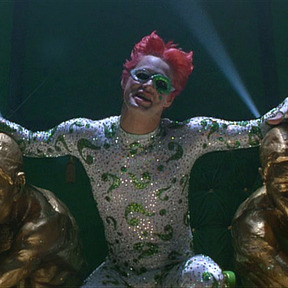
Pictured: Evil Incarnate
No better example of this can be found than in the abysmal Fantastic Four film. While she may not have been the antagonist of the film, Jessica Alba’s turn as the legendary Sue Storm was nothing short of nauseating due to the worst casting imaginable. Apparently a casting director read the description “Fair skinned: Blue-eyed: Blond Haired: and mid thirties” and said “Hey, I’m sure a twenty-something Latina girl would be PERFECT for this role!” Pop in some creepy as hell blue contacts, a horrendous looking wig, and bam! You’d never know the difference.  If you could change her looks so heavily if it meant landing a talented actress like Meryl Streep or Sigourney Weaver that’s one thing, but Alba stinks up everything she’s ever been in with her acting, relying solely on her looks to get her countless roles.


Pictured: Acting

Once she opened her mouth in Fantastic Four, all bets were off.
With it’s beautiful writing, gorgeously shot scenes, fantastic acting, and solid supporting cast, Children of Men still ranks as one of my top five films of all time. This is a powerful film, and should not be seen as a feel good film due to its brutal violence and incredibly dark content, but at the end of the day it still conveys that beautiful bit of hope buried in the darkest of places.
10 out of 10

Thursday, February 23, 2012

Toothpick TV: Arrested Development

A few articles ago I spoke about brilliant television shows that were axed to make way for horrendous television that seems to flourish these days. Chief amongst those examples was a show that ran for three struggling seasons, lost the Emmy for best comedy to (no sh*t) Will and Grace, and then died a quiet death to the dismay of a shocked audience. In my mind, this was the funniest show ever made (along with It’s Always Sunny in Philadelphia, which I will review later), and that show was… was Arrested Development.
I doubt you have ever seen this show, but I guarantee you have at least heard of it. During its short time on television this show was able to generate an image as one of the most original comedies to ever come out, and since its demise it is now often referred to as arguably the greatest comedy ever made (even more than Seinfeld). It also created a fan base so loyal and so fanatical that every time the series faced cancellation the fans would plead, march, and protest outside Fox in the hopes of renewing it for just one more season.
How was this show so well regarded? In my mind, it was because quite simply, it just plain got everything right. It starred the greatest comedic ensemble ever brought together and headed by a rebounding Jason Bateman, it was written by Mitchell Hurwitz (who would later go on to create It’s Always Sunny in Philidelphia with Robb McElheny), it was produced by film legends Bryan Grazer and Ron Howard, and was even narrated by Howard himself. It even won several Emmys for the first season it was on, but began getting shunned when the Emmys realized they were supporting a failing show.
The show centered around a wealthy family trying to cope in the middle of an economic crisis when their accounts are frozen after their patriarch father is arrested for a myriad of shady charges. What’s different with this show is the fact that this family is comprised of HORRIBLE people, and even though they occasionally show moments of humanity and likeability they are generally selfish, obnoxious, or idiotic. The mother of the main character is a condescending and verbally abusive drunk, the sister is a histrionic and self centered liar, the older brother is an idiotic magician, and the younger brother is… well… special. The only decent person in the family is the main character Michael, but even he has moments where he demonstrates a selfish nature and has a habit of neglecting his son’s wishes.
What really sets this show apart from other comedies however (and the reason it is so brilliant) is the style of its comedy, or rather the maturation of it. This show doesn’t typically follow the style of most shows on TV where it follows the basic “Setup->Payoff->Repeat” process of TV comedy. Instead of an immediate payoff followed by a laugh track, the show tends to allow the joke to linger and age so that the payoff is done in a much more rewarding way. What do I mean by this? Well it’s time for a little lesson in comedy.
In the world of comedy there are basically two different ways to elicit a laugh. The first of these methods is “the gag”, which typically consists of a quick, simple sight that the audience finds funny. This can be anything from the simple “guy falls down and goes boom” shtick which is so prevalent in Adam Sandler style films:

to “visual gags” that were made famous in films like Airplane:


to recurring gags which are actually repeating gags that become funnier the more the audience is exposed to them:

Don't you dare pretend that you don't know the name of this look.

 Typically gags are the easiest laugh to elicit and are regarded as immature and trivial if used poorly or too frequently, much like “pop out and create loud noise” scares in scary movie. Arrested Development uses gags in their comedy, but they are typically clever and well done sight gags and never really devolve into “man fall down… go boom” comedy. The show also uses them sparingly, or more importantly, to advance the story. For example, in a scene where Gob falls into a pool it isn’t the fall itself that is funny, but the fact that he is carrying a cooler full of exonerating evidence which is then promptly destroyed.
The second way to tell a joke or elicit a laugh is the harder and more rewarding “Setup->Payoff” technique, or the “punch line”. Typically this technique is exactly what it sounds like, where someone will say a line or setup a situation, and then down the line (either immediately or after a longer period of time) something will happen as a payoff to the initial setup called a punch line, drum roll, cue laugh track, repeat. The longer the period between setup and payoff, the funnier the joke typically is, but if you wait too long for the payoff, then you risk the joke growing stagnant or being forgotten. This is a surprisingly delicate setup, but typically the bread and butter of almost every decent sitcom on television, and it’s also the workhorse for Arrested Development.
Where Arrested Development really shines though isn’t so much in the execution of the joke, but in the perfectly matured delivery of the joke. Where most sitcoms have a setup with an immediate payoff, Arrested Development takes risks and allows a joke to build steam before the payoff is finally executed. The maturation period between jokes vary, but some of these jokes have payoffs that the viewer won’t even see coming until the end of the episode, and I can think of several jokes that take so long to reach the punch line that the viewer doesn’t even know that they’re jokes. During one season one of the biggest story arcs revolved around a main character being retarded (no, not Buster), but the audience wasn’t aware of this fact until about halfway through the season. As a result every single line this person had spoken takes on a new light and pays off in ways the audience didn’t even expect.
Another direction the show sometimes takes is a combination of the “setup-payoff” structure and the “repeated gag” structure. For example, a quick joke will be told which is initially funny, but as the payoff is repeated and applied to other situations the result is much funnier than the initial payoff. Any person who is lucky enough to have seen the show will know just how funny these seemingly pointless moments are, such as:
The Charlie Brown Theme
“Her?”
 “But where did the lighter fluid come from?”
Microwaving a Ding Dong
“Who’s Anne?”
“I’m Oscar… dot com.”
“Look at banner Michael!”
“So say goodbye… to THESE!”
“There are literally dozens of us!’
“Who’s the ‘her’ in that sentence?”
Finally, the last major comedic component that helps put this comedy in a class of its own is the fact that there are just plain SO MANY jokes. When overusing jokes like crappy shows tend to do they run the risk of becoming obnoxious. Shows like Whitney or Will and Grace were notorious for this, where their laugh tracks were so overused that anyone at home watching ended up not understanding what the hell is going on, or feeling insulted that a show was prompting them to laugh at something that just plain wasn’t funny. Arrested Development gets around this problem by:
A.      Not using a laugh track
B.      Having the jokes be genuinely funny
C.      Filming the actors reactions rather than using the awkward “pause for laughter” effect
There are so many jokes on this show that it literally gets funnier on repeated viewings. Many of the jokes are so well scripted and subtly delivered that the viewer may not even notice them initially. I can think of one joke where Michael remarks about the detail of television shows, and in response Tobias says something along the lines of “You know those Hollywood shows, there’s always so much detail in them”. After saying his line he opens up a food cupboard which contains nothing but a single bowl for him to pull out on cue, and a Starbucks coffee cup that a stage hand left behind on the set, but it’s kind of hard to see these items. It’s so subtle that most viewers would miss it, especially since most jokes on sitcoms these days are always hitting you over the head with the punch line. Even better is that a minute or so later another character opens the cupboard and we the audience are treated to seeing him pull out a candy bar that wasn’t there a moment ago, it’s just so brilliant!
All these components together make for a great recipe, but the catalyst that puts it all together is the talented cast of genuinely funny comic geniuses. Every single person on this show is perfect in their role, whether it be a surprisingly funny Jason Bateman in the lead, or David Cross as a less than subtle closet case/wanna be actor, or Tony Hale as a special needs social pariah who is overly dependant on his mother, or Jeffrey Tambor as the lying, conniving patriarch of the family who may or may not be innocent. My personal favorite was Will Arnett (who I personally believe to be the funniest man alive) as the self-obsessed failed magician brother Gob, and sadly (or happily?) I believe that Gob Bluth will be the greatest role Mr. Arnett ever play.
So how could this show possibly have failed? Well, for such a brilliant and well made show, there were surprisingly a lot of reasons. First of all, this was not a show for the popcorn munching, Whitney watching masses. Not to sound condescending, but if you try to make a sitcom that is different than the other generic cookie cutter sitcoms out there you better be on a cable network if you want any security. I don’t want to sound condescending (which I totally am), but typically people don’t like different things, and watching a show as intelligent and original as Arrested Development makes them feel uncomfortable that there isn’t a laugh track or something available to prompt them to laugh. This type of comedy can sometimes distance a viewer, and it’s a big reason why many of the best regarded comedy films or television comedies aren’t initially well received (Arrested Development, Zoolander, Big Lebowski, Tropic Thunder, the first Austin Powers), but begin to spread in popularity upon repeated viewings.
When writing about Fringe I mentioned that one of its biggest problems is that the since the show is perpetually moving forward it’s very hard for new viewers to be able to tune in and enjoy, and sadly this was the same case with Arrested Development. This is one of the first sitcoms I can think of that had a story arc that was truly advanced through each episode, and while it paid off big with great character arcs and an intriguing story, the problem was that the average viewer might jump in about eight episodes deep and scratch their heads at what was going on. This led to a fan base that never really had a chance to grow, despite the great word of mouth that everyone was hearing about this show.
I’d love to say that Fox dropped the ball and cancelled this show before it even had a chance like it did with Firefly, Family Guy, and so many other great shows, but that isn’t the case here. This show was brought back from the dead several times because Fox saw a lot of potential in it, it just didn’t catch on the way it should have (there was even an episode of the show where the premise was a thinly veiled reference to this fact). Luckily for everyone the show is ready to make a comeback, as Netflix has bought the rights and plans on releasing at least two more seasons of the show followed by a big screen adaptation. This makes fans like myself giddy for a show like I never could have imagined, and soon everyone will have another chance to enjoy the greatest comedy ever made.

Thursday, February 16, 2012

101 Reasons Why I Love Movies

A few days ago Quint from aintitcoolnews.com proposed a chain letter for all movie fans to write out their reasons for why they love film. As a hack, two bit, wanna be critic, I find it fitting to add my two cents of why I love film:

Because of the look on the warden’s face when he finds Andy Dufresne’s escape hole.
Because of Freddy Krueger’s fifteen foot long arms.
Because Vader was Luke’s father all along.
Because we’ll always have Paris.
Because the Goonies taught me it was alright to be a kid.
Because the Terminator gave John Connor a thumbs up.
Because of Popeye Doyle.
Because of Butch saving Marsellus Wallace.
Because it’s not the years, it’s the mileage.
Because of the noise that the TARDIS makes.
Because of Viggo Mortenson replacing Stuart Townsend as Aragorn.
Because Hellboy gets the girl in the end.
Because of ECTO-1.
Because of the Drunken Samurai.
Because of Doc Brown inventing time travel after hitting his head on a toilet while hanging a clock.
Because the cries of a baby stopped a war in Children of Men.
Because of Ferris Bueller getting away with it.
Because the force is my ally, and a powerful ally it is.
Because Shaun’s got red on him.
Because of Michael Corleone standing guard outside his father’s hospital room.
Because of the Mexican standoff in The Good, the Bad, and the Ugly.
Because of flying monkeys.
Because of James Stewart’s pleas in front of Congress.
Because of the Wolverines.
Because of Wolverine.
Because of Bill Paxton in Aliens.
Because of how the Predator looked.
Because there’s no fate but what we make for ourselves.
Because of Shadow making it home with a limp.
Because of the trailer for Lord of the Rings: The Two Towers

Because of Roger’s zombification scene in Dawn of the Dead.
Because of Sam Raimi’s camerawork.
Because the Maltese Falcon was a fake.
Because Jack Sparrow was an Anti-Hero.
Because of Simon finally telling Kaylee what he thinks about her.
Because of the Joker’s magic trick.
Because Kumar had an abusive relationship with a bag of weed.
Because of Rooster Cogburn… both of them.
Because David Spritz’s eulogy of his father was “When I think of my father, I think of Like a Rock by Bob Seger…”
Because Robocop had a huge ass gun in his leg.
Because Mr. Pink doesn’t tip.
Because of the missile launch in The Rock.
Because Buzz and Woody became best friends.
Because of Paul Giamatti in Sideways.
Because of Paul Giamatti in Cinderella Man.
Because of Paul Giamatti in Shoot em’ Up.
Because of Paul Giamatti in American Splendor.
Because of Paul Giamatti.
Because of Colonel Hans Landa.
Because Iron Man was created out of desperation.
Because Bruce Willis was dead all along.
Because a light that burns twice as bright lasts half as long.
Because Peter Parker was, and always will be a nerd.
Because of Quatto.
Because of Bruce Campbell’s chainsaw arm.
Because Indy shot the sword fighter.
Because of when John McClane threw C4 down an elevator shaft.
Because of Bela Lugosi as Dracula.
Because of Harry Potter out-flying a dragon.
Because of Maverick finding his nerves again.
Because of the theme for the Ark of the Covenant giving me goose bumps whenever I hear it.
Because of Winston digging Jesus’ style.
Because we’re gonna need a bigger boat.
Because of Ellen Ripley.
Because of Anton Shigurh’s silenced shotgun and air gun.
Because I can watch ten Meryl Streep movies and swear I was watching ten different actresses.
Because of the Witch-King’s screams.
Because the Bride gets her daughter back.
Because of Jaws… the shark AND the henchman.
Because if the Reavers catch us, they’ll rape us to death, eat us, and wear our skins as clothing… and if we’re very, very lucky, they’ll do it in that order.
Because of Michael Keaton in Beetlejuice.
Because of the Batmoblile.
Because Fredo broke Michael’s heart.
Because where we’re going, we don’t need roads.
Because of Lando Calrissian.
Because of the trailer for Inception.

Because Gore Verbinski refused to fire Johny Depp from Pirates of the Caribbean.
Because of Tom Cruise climbing the Dubai tower in real life.
Because of the final line in There Will Be Blood.
Because of the musical styles of Two Steps From Hell.
Because of Tony Montana’s little friend.
Because of Dan Akroyd in Grosse Pointe Blank.
Because of Yvaine telling Tristan that she loved him while he was a mouse.
Because of the way they caught Jerry Lundegaard.
Because I believed in Harvey Dent.
Because Truman Burbank questioned his life.
Because of the Cone of Shame.
Because this is Bat Country.
Because HAL told Michael he was sorry.
Because of the commentary track for Evil Dead 2: Dead by Dawn.
Because of Ron Burgundy ‘s suits.
Because Boo Radley saved the day.
Because of The Pumpkin King.
Because of Mr. Incredible getting back in shape.
Because of Bluto’s face when they drop the booze.
Because I am serious, and don’t call me Shirley.
Because of Deep Focus.
Because Roy Batty didn’t want to be forgotten.
Because of the War Room Scene from Dr. Strangelove.
Because of Oscar Schindler’s final regrets.
Because of Will Munny losing his s**t in the bar.

Tuesday, January 24, 2012

My Best of 2011 List

I’m certainly not a professional movie critic, so my scope in films over the year is severely limited to say the least. I certainly try to see the big buzz blockbusters, but there are quite a few movies that have slipped through the cracks for me. That being said, it would be sort of counterproductive to write a “Best Of 2011” column for something as limited as my experiences, so here is a quick roundup of moments and people from film and TV that I enjoyed this year.
Be warned, thar be spoilers ahead!
Top Five Heroes of 2011:
1. Colter Stevens (Source Code)-The regular person (myself included) whines when they have to go into work with a cold, so it takes a real hero to finish an important assignment when they are informed that they were literally killed a month ago. Captain Colter Stevens reminds the audience of the importance of the greater good, even after realizing it’s for a world he no longer has any part in.
2. Po (Kung Fu Panda 2)-Po won over both audiences and his fellow kung-fu masters in the original film with his balls to the wall love of all things kung-fu and his desire to protect those around him, but his second go around makes him all the more more likeable. After discovering the dark history of a life he never knew, Po refuses to let it bring him down, and instead uses it to achieve inner peace and perform the impossible.
3. Rory the Last Centurion (Doctor Who)-It may have been the Doctor who tracked Amy Pond to the impregnable fortress of Demon’s Run, but it was Rory who led the charge with a sword in one hand and a laser in the other.  Good-hearted, loyal, and willing to plunge headfirst into Hell itself for his wife and child, Rory shows us all how even the most unassuming of characters can have the heart of a warrior. It also doesn’t hurt that he has the training of a thousand year old centurion to help transform him into a badass.
4. Captain Archibald Haddock (The Adventures of Tintin)-At first glance Haddock may appear to be a lost cause in the form of an incompetent and alcoholic oaf, but when pressed into dire situations or when his friends are in danger this lumbering doofus can become the most hardened of warriors to save the day. When not fighting for his friends he also delivers motivational speeches so epically that they deserve an Oscar unto themselves.
5. George Smiley (Tinker Tailor Soldier Spy)-Amidst a web of deceit, lies, and disgrace, former British Intelligence agent George Smiley still remains cool enough to root out an impossible to find Soviet mole while in the midst of being set up to take the fall. His sharp wits, expert detective skills, and years of training have made him the type of hardened man that even Batman would envy, and he always manages to remain levelheaded in spite of his critical situation.

Top Five Villains of 2011:
1. Professor James Moriarty (Sherlock Holmes: A Game of Shadows)-A master of deceit, a legend in the world of literature, and portrayed by an actor of the highest caliber, Professor James T Moriarty is reinvigorated on the big screen in spectacular fashion. Brilliant, sinister, and full of seething hatred at the human condition, Moriarty’s loathing for legendary detective Sherlock Holmes is only surpassed by his immense  respect for the man, making their first meeting a moment of barely restrained hatred behind a façade of pleasant smiles and autographs.
2. Lord Voldemort (Harry Potter and the Deathly Hallows: Part 2)-The instantly recognizable villain of the Harry Potter universe returns in the final film installment of the decade spanning series, and what a return it is. When Ralph Fiennes isn’t chewing the scenery by the mouthful he’s exuding pure, seething evil with such simple grace that one has to wonder in fear just how this guy excels at playing such fantastic villains.
3. Helen Harris (Bridesmaids)-A perfectly relatable villain to anyone who has encountered someone like her (probably all of us), Helen Harris is the quintessential personification of the limelight stealing, passive aggressive c**t born for the sole purpose of making your life miserable. Whether she’s sabotaging your best laid plans, undermining your ideas, or stealing credit from where it is due, the antagonist of this witty and well-scripted film brings something to the table that makes everyone cringe in hatred… a sense of real life relation.
4. “Them” (Cowboys and Aliens)-A film that had a polarizing effect on its’ audiences to say the least, this film which was begging for schlock treatment was instead given a serious play thanks to talented director Jon Favreau. As a result, we get a race of aliens that are a perfect blend of original looking aliens (how great is it to see something other than a “grey” attacking Earth?) and physically powerful movie monsters.
5. Sebastian Shaw (X-men: First Class)-Fans have been clamoring for an X-men film about the Hellfire Club, and while January Jones nearly sank the idea with her portrayal of Emma Frost Kevin Bacon singlehandedly pulled the wreckage from the depths and made that film his b*tch. A brilliant and powerful mutant hellbent on global annihilation, Shaw brings a villainous attitude to the screen that’s part campy comic book super-villainry, and part James Bond super-villainry. The end result is the most campy and fun interpretation of a comic villain since Jack Nicholson stepped into the shoes of the Joker.

Top Five Moments of 2011
1. The Motorcycle Chase (The Adventures of Tintin)-Fast, taut, and exciting, the climactic chase scene near the end of this film is a perfectly paced action set piece reminiscent of the truck scene in Raiders of the Lost Ark. As Tintin chases down a runaway eagle through the streets of Bagghar, the only thing more pressing than catching the bird is the wall of water nipping at his heels.
2. The Game Changer (Doctor Who)-Three loud crackles of energy rang out on Silencio Lake, and less than fifteen minutes into the sixth series premiere everything you knew about Doctor who changed in a flash. Thus started the mystery and dilemma that carried throughout the entire season, leading to the most unexpected wedding in the history of the show and promising even more questions to be solved in the seventh series.
3. The Turn (X-men: First Class)-Magneto may be one of the greatest anti-heroes in the history of comic books. Not quite a sociopathic villain like the Joker, and not quite an amoral hero like the Punisher, Magneto runs a campaign of evil based on moral convictions which we all know are true, but these beliefs all stem from his personal life experiences and his short time as a hero. In this newest X-men adventure we are treated to an interpretation of when Magneto just plain went too far, and it’s just as awesome and terrifying as we could have hoped for.
4. The Sandstorm (Mission Impossible: Ghost Protocol)-The tower heist is spectacular, the operation is awesome, but the foot/car chase that ensues as a sandstorm begins to blow into Dubai is a thousand times as intense as anything in the most over-inflated summer action film. This scene shows how, with a little good direction, some great stuntwork, and a good score, you can create a scene that comes across much more exciting and better looking than even the most expensive CG action scenes.
5. Gary Oldman (Tinker Tailor Soldier Spy)-He may not be an actual moment, but Gary Oldman is definitely a reason to still go see movies. It seems people like Jack Nicholson and Morgan Freeman continue to get Oscars for playing… Jack Nicholson and Morgan Freeman, but the real talent in Hollywood are the chameleons. People like Johny Depp, Meryl Streep, and Gary Oldman are who I find the most fascinating because I can watch ten of their films and if I didn’t know better I would swear I had just watched ten different actors playing those roles.

Top Five Dorks of 2011
1. Adam Sandler (Jack and Jill)-Only a true dork (or a brilliant money launderer: hint hint) could take eighty million dollars and produce a film as horrible as Jack and Jill. Add to it the countless product placements , endorsements, and commercials throughout the film and you have upwards of over 100 million dollars to make a movie that looks like it costs maybe 10 to do. It’s almost as if the money somehow disappeared… into someone’s pockets… allegedly.
2. Sam Witwicky (Transformers: Dark of the Moon)-Sam has always been an obnoxious character, but it wasn’t until the third film that he decided to become a full blown child. Acting like a spoiled, whining baby instead of the steadfast hero we are supposed to believe he is, watching him throw hissy fits helps us suddenly understand why his first girlfriend left him.
3. Hector Hammond (The Green Lantern)-Having a ridiculously massive head doesn’t automatically make you a badass super-villain, it makes you Beldar from Coneheads, only not as intimidating.
4. The Smurfs (The Smurfs)-How does this film get a worldwide release while films like The Goon and At the Mountains of Madness die quiet, uneventful deaths in production Hell? 142 million dollars… that’s how.
5. Ron Weasley (Harry Potter and the Deathly Hallows: Part 2)-Unlike everyone else on this list, Ron is the endearing type of dork. He’s panicky for a hero and a bit of an awkward pariah, but he never fails to make us laugh, and is always dependable in a tight situation. He’s like that friend you really enjoy hanging out with, but hesitate to introduce to the rest of your friends.

My Top Five Most Enjoyable (Not Necessarily Best) Films of 2011
1. Harry Potter and the Deathly Hallows: Part 2-9 out of 10
2. Cowboys and Aliens-9 out of 10
3. Mission Impossible: Ghost Protocol-9.5 out of 10
4. Source Code-9 out of 10
5. The Girl with the Dragon Tattoo-9.5 out of 10
(Special Recognition in the field of excellence)
Thor-8.5 out of 10
Adventures of Tintin-8.5 out of 10
Arthur Christmas-8 out of 10
Paul-9 out of 10
Sherlock Holmes: A Game of Shadows-8 out of 10

Tuesday, January 17, 2012

One Minute Reviews: TinTin, Dragon, and Holmes

The Adventures of Tintin-I went into this film without a clue of what it was, but a dedication to see it because of my love for Peter Jackson, Stephen Moffet, Simon Pegg, Nick Frost, and Andy Serkis. I had a preconception that this was going to be a CG flick of something akin to an Indiana Jones movie, but what I got was so much better than a derivative adventure film.
Easily my all-time top pick for the best use of CG, motion capture, voice acting, and 3D in a film (yes, even more than Avatar), Tintin is a fantastic film that harkens back to the older pulp adventure serials that Indiana Jones was also trying to recreate. The result is a fantastic and exciting adventure filled with funny and likeable characters brought to life through some of the best voice acting in history (with a special standout performance by Andy Serkis).  What makes this film stand out from the competition is the expert pacing, as the action set pieces masterfully outdo each set piece before and every twenty minutes is even more exciting than the previous twenty minutes. All the tension builds to a frantic climax centering around a motorcycle chase scene that easily competes for my favorite moment in film for 2011. Following this is a genuine and powerful moment of expository and character driven dialogue that’s so well written and quotable that it proves once again why Andy Serkis is at the top of his class.
My biggest regret with the film is that it just sort of ends, but I don’t mean that in the anti-climactic, sudden endings that I’ve been complaining about recently. It just feels like there could have been a lot more resolution for these characters after we have grown to like them so much, even though I know they were just trying to set up the sequel. At times it also feels like it was slightly pandering to a younger audience, which is a shame because the film is at its’ best when it’s trying to be a family film and not a children’s film.
 All in all though I liked The Adventures of Tintin a lot while I was watching it, but it wasn’t until after the credits rolled that I realized just how much I wanted to watch it all over again from the beginning. A real treat.

8.5 out of 10


The Girl with the Dragon Tattoo-There’s never been a doubt in my mind that David Fincher is one of the best directors in Hollywood, and The Girl with the Dragon Tattoo once again shows just how talented and original this director is. Taking what was deemed an impossible project (the original film came out just over two years ago), David Fincher has created a tense and psychological noir thriller worthy of his other entries.
Fincher has a real love for two things; detective work and sociopathy, and he seems to demonstrate this in many of his films (Se7en, Zodiac, The Game). His newest work once again combines both of those elements into a film that always has you guessing what’s coming next, even going so far as to continue the story in an unexpected fourth act. His use of lighting, scene construction, music (done once again by the outstanding Trent Reznor), and most of all, ambiance creates a film that is perpetually suspenseful, even in the relaxed moments of the film. Now I have to confess, I never saw the original film or read the bestselling book, but if they have half of the magic of this film then they are alright in my book.
Fincher’s love and understanding of detective work has always been one of his greatest strengths, but also his greatest weakness as demonstrated in the film Zodiac. In my mind this was probably the greatest detective story ever told, but it turned a lot of people off with its’ long running time and somewhat slow build up of tension (just like real police work!). Fincher seems to have learned from this experience however, and The Girl with the Dragon Tattoo mixes the slow build up of an investigative story with an exciting story of Lizbeth Slander and interesting character development between the two leads.
SPOILERS
Now I’d be remiss if I didn’t mention the rape scene, as it’s been getting a lot of people up in arms, but it wasn’t nearly as bad as I thought it would be. Almost every rape scene in film is added for shock value, but in this movie it seems like a necessary evil to show the scene so we could understand the horrible life this girl has and why she responds the way she does. Believe me, I’d be the first to cry foul if I didn’t think something this serious wasn’t handled properly, but Fincher is a responsible enough director to know how to create this scene respectfully and delicately.
END SPOILERS
The Girl with the Dragon Tattoo isn’t as exciting or accessible as most of Fincher’s other films, and at times it feels like a film he was pressured into making and not his own pet project, but overall it’s a fantastic first entry into this new and exciting trilogy property.

9 out of 10


Sherlock Holmes: A Game of Shadows-A lot of people don’t know this, but Professor James Moriarty is the first “arch-enemy” ever found in literary history, laying the groundwork for what a great overarching villain should be. This is important because I read these books growing up and going into this movie the one thing that kept running through my head was “Jared Harris better knock this out of the park”.
I have been a huge fan of Harris since his run as antagonist Robert Jones in season one of Fringe, and it doesn’t hurt that he’s the son of legendary screen and stage actor Richard Harris, but none of that changed the fact that this film was going to literally rise or sink from his portrayal of this classic Doyle “Napoleon of Crime”. I’m happy to report that he pulls the role off magnificently, adding a crucial piece to the puzzle of why this film worked for me. Between Harris and the addition of a great cast of new characters to the franchise (including the always brilliant Stephen Fry in a standout performance as Holmes’ brother Mycroft), the smooth camerawork, the original use of effects, and stellar work from the returning cast, this film came together into a solid sequel to one of the most original films in the last ten years.
Now a lot of people are complaining that this film isn’t as “slick” or as “cool” as the original, but people who say that just aren’t looking in the right places. Guy Ritchie has always been praised as an actor’s director and a talented cinematographer, but just because we don’t see as many action sequences as the previous film doesn’t at all mean that he hasn’t focused the same magic as before. If anything this film shows a forward progression in his styles, oftentimes trading in cheap and easy “slick” shots for more complicated and effective “style” shots, and when we see these shots in motion they come across as interesting, original, and very, very stylish. The scenes between Holmes and Moriarty for example convey a sense of uneasiness, tension, and dread despite the pleasant tones and smiles between the two men.
Another one of my favorite cases of these shots was a scene where the sniper is chasing after the heroes in a forest while being bombarded with artillery, but during the chaos and hell surrounding him the camera focuses on his face and allows it to remain almost steady as he hurtles through the trees. It’s a tough shot to describe, but it conveys the idea that this man is focused on one thing despite the chaos surrounding him, establishing him as a child of the battlefield without saying a single work of dialogue.
A lot of people are saying that the ending is a cop-out as well, but faithful readers of Sherlock Holmes will know that this is exactly how the book Sherlock Holmes and the Final Problem ended. As soon as I saw that waterfall I knew what was coming, so you can’t possibly fault a director for wanting to (GOD FORBID!) convey the authors’ intentions. As for the plot, anyone with a seventh grade education can figure it out, but I did feel a little disappointment at the lack of Holmes’ signature “exposition” that always signaled the impending end of his books and stories.
All in all I found this movie to be a satisfying follow-up to the original. It may not have had quite the same “original” feel of the first film, but it was just as thoroughly engaging, delightfully witty, and universally appealing as its’ predecessor.

8 out of 10